Search This Site

Saturday, October 20, 2018

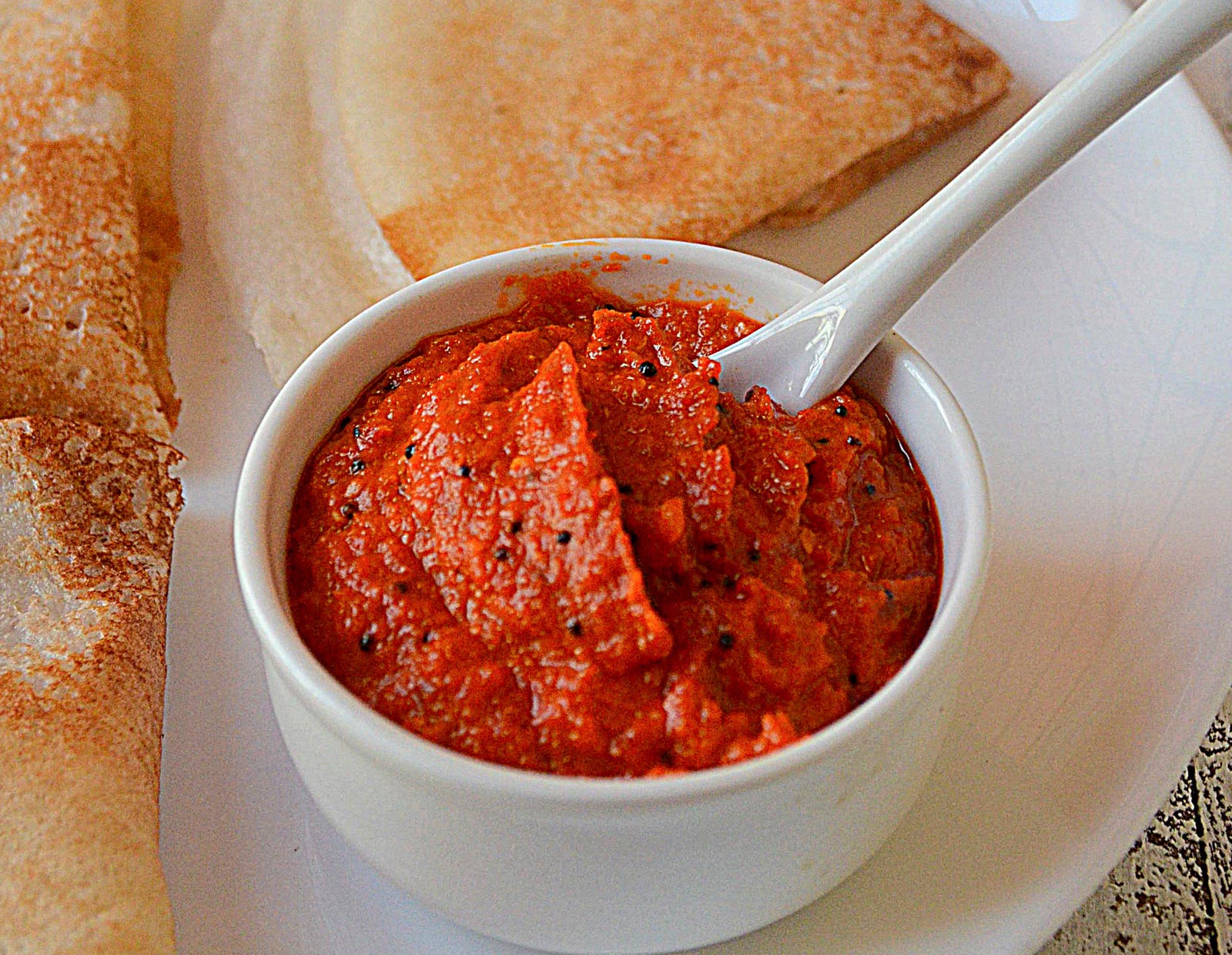
Andhra style pudina pachadi - Mint leaves chutney

When there is nothing available,  a chutney and ghee is enough to finish our meal along with hot steaming rice.  The pudina pachadi is made by adding fresh mint leaves and coriander leaves along with some spices.

Every meal in South India consists of some varieties of chutneys and the Pudina pachadi is one among them.  The pudina pachidi is best eaten with hot steaming rice and ghee in all parts of South India.  

In Andhra pradesh, we eat a lot of chutneys by simply mixing them with hot steaming rice with some ghee or sesame oil.   I already wrote about a lot of Andhra chutneys or Pachadis which include few such as Pandu Mirapakaya Pachadi,  Kothimeera pachadi,  Chinta chiguru pachadi,  NImmakaya Uragaya  and many more....  In this article let us see how to make Andhra Style Pudina Pachadi..


Ingredients required : 

    Image titled Gri5
  • Fresh Pudina leaves ( Mint leaves )  -  250 grams
  • Dry red chillies -  25 grams
  • Tamarind pulp - 10 grams
  • Cumin seeds -  1 tbsp
  • Split white lentils -  1tbsp
  • Oil -  2 tbsp
  • Asafoetida powder -  1 tbsp
  • Salt -  1 tbsp
  • Water -  10 grams
  • Mustard seeds -  1 tbsp
  • Curry leaves  -  6 to 10 

Method of making Andhra style Pudina Pachadi : 

  • First take the Pudina leaves, wash them and clean them.  
  • Now add the red chillies in a frying pan and dry roast them and keep them aside in a plate
  • Now add a bunch of pudina leaves on the frying pan
  • Add 1/2 tbsp of oil and stir fry the leaves.  Add more leaves  and allow the leaves to cool down for some time
  • Add the mint leaves and red chillies which were fried into a mixie jarand add salt
  • Now add tamarind pulp and water and grind them together
  • Add more water if required to grind
  • Place the chutney in a separate bowl and sprinkle asafoetida powder
  • Make Andhra seasoning and add curry leaves
  • Pour the seasoning over the asafoetida powder to get the flavour
  • Mix well and serve in a bowl
This Pudina chutney can be served with Idli, Dosa or hot rice...

If you found this post helpful,  then you can share it with your Facebook friends or Twitter followers today.  Also please post your comments after reading this article...


If you want to know about more Indian recipes,  you can visit my other blog on Indian Recipes.


Sorakaya Pachadi - Bottle gourd chutney

The sorakaya pachadi is normally prepared because there is left over bottle gourd lying in the kitchen or refrigerator.  Most of the times it is a very small portion which is left over and there is nothing much that can be prepared except the sorakaya pachadi or the bottle gourd chutney.  The sorakaya pachadi can be taken along with hot rice...   Let us now see how to make Sorakaya Pachadi or the Bottle Gourd Chutney..

Image result for sorakaya pachadiIngredients required :

  • Bottle Gourd ( Sorakaya )  -  100 grams
  • Ural Dal -  1 tbsp\
  • Senaga pappu (Bengal gram ) -  1/2 tbsp
  • Mustard -  1/4 tbsp
  • Dhaniya ( coriander seeds ) -  1 tbsp
  • Tamarind -  lemon sized
  • Salt as needed
  • Green chillies - 3 nos
For seasoning :
  • Oil -  2 tbsp
  • Urad dal -  1  1/2 tbsp
  • Mustard -  1/2 tbsp
  • Methi -  1/4 tbsp
  • Jeera -  1/4 tbsp
  • Red chillies -  2 nos
  • Curry leaves - 7 nos
  • Hing ( Asafoetida ) -- a pinch
Method of making Sorakaya Pachadi :
  • Chop the bottle gourd into medium sized pieces
  • Heat oil in a pan and add these bottle gourd pieces, tamarind, salt, green chillies and saute for 5 minutes
  • Now fry the urad dal, bengal gram, dhaniya, mustard in some oil
  • Cool the fried mixture and grind it after adding the bottle gourd mixture
  • In the same pan fry all the seasoning ingredients and mix them with the grounded mixure

Serve this Sorakaya Pachadi with hot steaming rice and a dollop of ghee...

If you found this post helpful,  then you can share it with your Facebook friends or Twitter followers today.  Also please post your comments after reading this article...

If you want to know about more Indian recipes,  you can visit my other blog on Indian Recipes.


Thursday, October 18, 2018

Pandu Mirapakaya Pachadi - Andhra Ripe Red chilly chutney

Image result for pandu mirapakaya pachadiIn this article,  You will learn how to make Pandu Mirapakaya Pachadi or the red chilli chutney..
Pandu Mirapakaya Pachadi  - Andhra Red Chilli Chutney Recipe
Andhra Ripe Red Chilli Chutney also known as the Pandu Mirapakaya Pachadi is a simple South Indian chutney which is made with fresh red chillies. This chutney is easy to make and requires very few ingredients. This is a perfect chutney to serve along with Dosa, Idli and Uttapam for your breakfast.  The pandu mirapakaya pachadi is very popular in Andhra Pradesh. 


Ingredients required:

  • 100 grams of fresh red chillies
  • Tamarind paste -  1 tbsp
  • Gingelly oil -  2 tbsp
  • Mustard seeds -  1 tbsp
  • Asafoetida -  1/2 tbsp
  • Menthi powder ( fenugreek powder ) -  1/2 tbsp
  • Salt to taste

Method of making Pandu Mirapakaya pachadi:
  • First remove the stalks of the chillies and thorughly wash and dry them
  • Heat a little oil in a heavy bottomed pan.  Add the fresh red chillies and fry them on medium heat for 2 minutes.  Remove them and keep aside and let them cool down
  • Once the chillies come down to room temperature, grind them with tamarind paste into a smooth texture.
  • Heat two table spoons of oil in a pan and add mustard seeds and once they splutter add Asafoetida
  • Add the red chillies tamarind paste after 10 seconds and let it cook for about a minute.  Turn off the flame.  Allow the pachadi to cool down and store in an air tight container.
Serve the Pandu Mirapakaya pachadi with hot steaming rice or even with Dosa.

If you found this post helpful,  then you can share it with your Facebook friends or Twitter followers today.  Also please post your comments after reading this article...

If you want to know about more Indian recipes,  you can visit my other blog on Indian Recipes.


Tuesday, October 16, 2018

Kothimeera pachadi - Cilanthro chutney

Kothimeera or the coriander leaves are a good source of Zinc and Thiamin and very good source of fiber, Vitamin A, Vitamin C, Vitamin C, Vitamin K, Vitamin B6, Calcium, Iron, Magnesium, Potassium, Phosphorus, Copper and Manganese. In this article we wll see how to make Kothimeera pachadi or the coriander leaves chutney.
Related image
The Kothimeera pachadi is very native chutney all over south India.   No Indian meal is complete without freshly prepared chutney.  In north India,  it is called as Hari chutney.  In South India,  Kothimeera pachadi is taken along with Idli, dosa, vada etc  and also with steamed rice.. 


Ingredients required:
    Image result for kothimeera pachadi
  • 2 big bunches of fresh coriander leaves (washed and chopped)
  • Green chillies ( slit lengthwise )  -  3 nos
  • Dry red chillies -  2 nos
  • Senaga pappu ( Bengal gram ) --  1 table spoon
  • Minapa pappu ( Urad dral )  --  1 table spoon
  • Jeelakarra ( Cumin seeds )  -  1/4 tbsp
  • Tamarind paste -  1/2 tbsp
  • pinch of sugar or jaggery ( optional )
  • Salt for taste
  • Oil
  • Mustard seeds - 1 table spoon for seasoning
  • Curry leaves -  12 nos for seasoning

Method of preparation of Kothimeera pachadi:  
  • First take 1 tbsp of oil in a pan and heat it.  Add cumin seeds and wait till they splutter.
  • Now add dry red chillies, urad dal, senaga pappu and fry till brown ( 2 to 3 minutes on medium heat )
  • Remove them from pan now.  Add some oil to the same pan and add the coriander leaves and green chillies and fry for 3 to 4 minutes on a medium flame stirring constantly.  Remove them and cool them
  • Grind the fried dals mixture, tamarind paste and salt till the dals are well ground.  Add coriander leaves and green chillies next and grind to a slightly coarse paste adding little water
  • Now heat 1/2 tbsp of oil in a pan.  Add mustard seeds and let them splutter and then add the curry leaves and fry for 10 to 15 seconds and turn off the flame.  Add this to the chutney and mix well.
Serve this Kothimeera pachadi with Idli, Dosa, Vada or with steaming rice with ghee.  If you want little sweet taste, you can add sugar or jaggery.

If you found this post helpful,  then you can share it with your Facebook friends or Twitter followers today.  Also please post your comments after reading this article...

If you want to know about more Indian recipes,  you can visit my other blog on Indian Recipes.
Nimmakaya Uragaya - Andhra Lemon pickle

Image result for nimmakaya pachadiThe nimmakaya uragaya or simply Nimmakaya in telugu can be found in most of the South Indian homes especially in Andhra pradesh in many weddings.  The pleasure of having Nimmakaya along with Perugu Annam ( curd rice ) is indescribable.  This nimmakaya uragaya is one of the foods that you can "taste" when you are ill and when your sense of taste is dull.  Lemons can be found throughout the year in India.  But the best time to prepare nimmakaya uragaya ( lemon pickle) is in winter when you get the juicy fruit in abundance.   In this article let us see how to make NImmakaya Uragaya - which is a nilava pachadi which means we can store this pickle for 1 or 2 years..

Image result for nimmakaya pachadiIngredients required :  

  • Lemons -  25 nos
  • Turmeric -  2 tbsp
  • Salt - 1/2 cup
  • Chilli powder -  2/3 cup
  • Sesame oil -  1/2 cup
  • Mustard seeds -  1 tbsp
  • Fenugreek seeds -  1/2 tbsp
  • Asafoetida / Hing powder -  1/2 tbsp


Method of making Nimmakaya Uragaya :
  • Wipe the lemons dry with a soft, dry cloth.
  • Dry them in the sun for about 1 hour.
  • Mix salt and turmeric powder in a kadai
  • Cut the lemons into quarters or smaller pieces
  • Add these lemon pieces to the salt and turmeric and mix well
  • Store in a dry and clean air-tight ceramic jar for 3 days
  • After 3 days, heat sesame oil in a kadai
  • Add mustard seeds and wait till they splutter
  • Turn off the heat
  • Add the asafoetida powder
  • Let the oil cool completely to room temperature
  • Dry roast the fenugreek seeds till they just start change color
  • Let these seeds cool completely and then powder them
  • When oil is completely cool, add the fenugreek powder, chilli powder and the lemon-turmeric-salt mix to the oil
  • Mix all these items well
Store this pickle in a dry and clean air-tight ceramic or a glass jar for 3 weeks  Serve this pickle with curd rice and enjoy the freshness of lemon.

If you found this post helpful,  then you can share it with your Facebook friends or Twitter followers today.  Also please post your comments after reading this article...

If you want to know about more Indian recipes,  you can visit my other blog on Indian Recipes.


Sunday, October 14, 2018

Chinta Chiguru Pachadi - Tender tamarind leaves chutney

Chinta Chiguru Pachadi:  Sour chutney made with tender tamarind leaves or the Chinta chiguru called in telugu is a seasonal item and perfect delight during the summer.  The chinta chiguru is abundantly available on road sides in towns and villages of Andhra.  The Chinta chiguru is normally not available in the local subji mandis or rythu bazars but can be seen in villages.

The tamarind leaves have many health benefits.  They provide relief from Malaria.  The tamarind leaves have health benefits like ease the stomach discomfort, aids in digestion and used as a laxative.  The tamarind preparations are used for fevers, sore throat, rheumatism, and even sun stroke.  

Summer season is the most welcome season for all food lovers in Andhra pradesh.  The reasons being the pickles made with various items like tamarind, mangoes, usiri kaya, dosa kaya etc..  The tender tamarind leaves dearly called as Chinta Chiguru in telugu is very sour in taste and is delicious when used in making dals, powder or a chutney. The chinta chiguru pachadi is one of the best item to be taken along with hot steaming rice along with ghee.  It is very simple to make chinta chiguru pachadi.   We can also make Chinta Chiguru pappu ( dal with tamarind leaves ) which is very delicious  Let us now see how to make Chinta chiguru pachadi....  
Image result for chinta chiguru pachadi
Ingredients required :  

Dry powder :  
  • Dry Red Chili – 10 – 12 nos
  • Methi Seeds – 1 tsp
  • Mustard  – 1 tsp
  • Cumin Seeds / Jeera – 3/4 tsp

Dry roast all above ingredients and allow to cool  Then grind the seeds along with the red chillies to make a fine powder.
  • Chinta Chiguru – 1 cup  --> Wash and dry the leaves. then dry roast till completely dry
  • Garlic – 6 – 7 cloves
  • Tamarind – lemon size
  • Salt to taste
Combine everything in mixer and grind to a fine paste.

Tempering:
  • Mustard Seeds – 1/4 tsp
  • Dry Red Chilies -2 
  • Garlic – 2 cloves
  • Curry leaves few
  • Oil – 1/4 cup
Transfer the ground paste to a small bowl.  Heat a pan with oil, temper with mustard, red chillies, chopped garlic, curry leaves and add the ground paste to the hot oil and cook for a while till the raw smell leaves.   Now serve the chita chiguru pachadi with hot steaming rice or even with Dosa.  It tastes very good even with dosa..

If you found this post helpful,  then you can share it with your Facebook friends or Twitter followers today.  Also please post your comments after reading this article...

If you want to know about more Indian recipes,  you can visit my other blog on Indian Recipes.

Wednesday, October 10, 2018

Bendakaya Pachadi in Andhra Style ( Ladies finger chutney )

The Okra or better known by its common name as lady's finger or 'Bhendi' in Hindi or  "Bendakaya"  in Telugu or "Vendakkai" in Tamil is a high fiber vegetable and is known for its high fiber content.  This Bendakaya is used in many recipe including Bendakaya kura, Bendakaya pappu and is also a part of nutritiional diet. There are many health benefits of this Bendakaya.  Some of the health benefits of bendakaya or the okra are 
    Image result for bendakaya pachadi
  • Prevents Diabetes.  Bendakaya is known to aid in prevention of Diabetes
  • It has Vitamin K benefits
  • It controls Asthma
  • It prevents constipation
  • prevents sun stroke
  • prevents color cancer and controls obesity
  • Prevents kidney diseases
Lady’s finger one of the very commonly used vegetables in Andhra and often found in the kitchen gardens of almost all the houses. It is rich in fibre content which adds strength to our body. It is also considered to improve our memory power.   Now let us see how to make Bendakaya pachadi or the Okra chutney or the Lady;s finger chutney.. 

Ingredients to prepare Bendakaya pachadi:
  • Lady's finger  -  250 grams  chopped
  • Onions -  2
  • Green chillies -  6 to 8
  • Tamarind  -  1 tbsp
  • Turmeric powder -  1/4 tbsp
  • Mustard -  1/2 tbsp
  • Jeera  -  1 tbsp
  • Dry red chillies -  3 to 4
  • Curry leaves -  4 to 5
  • Salt required amount
  • Oil - 4 to5 tbsp

Method of  prepare Bendakaya pachadi:
  • The first step in making bendakaya pachadi is to select tender lady’s finders and clean them with water. Then wipe them with a dry cloth and cut into pieces.
  • Now clean the onions and green chilies.
  • Take a bowl and add oil into it. Let the oil heat.
  • Now add green chilies into the oil and fry them for a minute.
  • After the chilies are fried, transfer them to a mixer jar,, and add onions and lady’s finger pieces to the bowl and fry them too for 2 minutes.
  • Transfer this mixture also to the mixer jar and add salt, little jeera, tamarind and mix them.
  • Once this mixture is ready, take a bowl and add 2-3 tbsps of oil and let it heat.
  • After the oil is heated add the pulses (popuginjalu), garlic cloves, jeera, mustard, curry leaves, red chilies, turmeric powder and let them fry for a minute.
  • Now add the bendakaya and onion pieces mixture onto the oil and mix them.
  • Now the tasty and yummy bendakaya pachadi is ready to taste.

Note: Bendakaya pachadi is an excellent combination for lunch with hot rice. However, this may also be consumed with breakfast and dinner.
If you found this post helpful,  then you can share it with your Facebook friends or Twitter followers today.  Also please post your comments after reading this article...

If you want to know about more Indian recipes,  you can visit my other blog on Indian
Recipes.